
Stelton
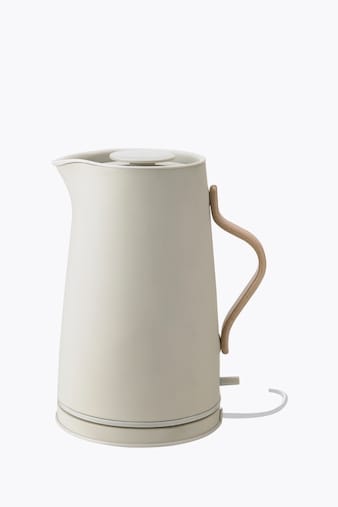
Stelton Emma kettle 1.2l sand
€208.99
Stelton
Stelton Emma kettle 1.2l sand
€208.99
Electric kettles make it easier to heat water quickly and with more control, which matters for everything from tea to pour-over coffee. Precise temperature settings, a balanced handle, and a well-shaped spout help support cleaner extraction, steadier pouring, and a smoother routine at home. For anyone refining a daily brew setup, fast heat-up and accurate water flow are not just convenience features. They directly support consistency in the cup.
:format(webp))
Different electric kettles suit different brewing habits. A gooseneck design supports slow, targeted pouring for hand-brewed coffee, while a classic spout fits faster serving for tea, French press, or larger batches. Capacity also shapes the workflow, especially when preparing several cups at once or keeping hot water ready for different drinks. Models with variable temperature control add flexibility for French press, manual brewing, and delicate tea styles, while simpler kettles work well when speed and straightforward handling matter most.
Material and build quality play a central role when selecting the right electric kettle. Stainless steel is valued for durability and easy care, while design details such as double-wall construction, ergonomic handles, and clearly readable temperature displays can improve comfort in daily use. A keep-warm function, boil-dry protection, and precise temperature presets are especially relevant when brewing requires more control than a simple full boil. For coffee-focused routines, spout geometry and pouring balance often matter just as much as heating power, especially alongside coffee grinders and manual brewers.
:format(webp))
The right electric kettle depends on brew method, kitchen space, and how much control feels useful in everyday preparation. A compact setup for manual coffee often works best when paired with pour-over brewers, a precise coffee scale, and suitable filter coffee accessories. Broader routines may also benefit from matching the kettle with coffee, tea, or additional accessories that support a more consistent and enjoyable preparation process at home.
Water temperature has a strong influence on flavour extraction. If it is too high, coffee can taste harsh and bitter. If it is too low, extraction stays incomplete and the cup can seem flat. An electric kettle with adjustable temperature settings helps keep brewing within a more controlled range for balanced results.
A gooseneck kettle offers better control over both pouring direction and flow rate. That makes it especially useful for pour over coffee, where a steady and even stream supports more consistent extraction. It is a practical choice for anyone who wants more precision during manual brewing.
For many coffee brewing methods, water just below boiling point is a good guideline. The source content points to a range of 94 to 96 degrees Celsius. In this range, aromas can be extracted clearly without placing too much stress on the coffee grounds.
Many high-quality kettles for coffee use stainless steel because it is durable and easy to clean. Glass models offer a clear view of the boiling process and can feel lighter in style, but they are often more delicate. The best choice depends on personal priorities such as appearance, handling, and care.
Regular descaling is important, especially when using hard water. Suitable options include dedicated Descaler products or diluted vinegar essence, always used according to the manufacturer’s instructions. After descaling, the kettle should be rinsed thoroughly so any residue is removed before the next use.